
OTEX Customs · Customs broker (RDE)
Import-export customs clearance, in France and worldwide
As a registered customs representative (RDE), OTEX checks your file, lodges the declaration, estimates the duties and taxes and follows the operation through to release, even without having organised the transport.
Straight answer
Who can entrust us with their customs clearance at Roissy-CDG?
Any business that imports, exports or moves goods in transit through Roissy-CDG or Orly. You entrust us with the complete operation, transport included, or only the customs formalities for goods that have already arrived.
Import
Release for free circulation and home use: calculation of duties and VAT, required documents, follow-up through to release.
Export
Export declaration, proof of exit from the Union to justify the VAT exemption, origin documents for your customer.
Transit and procedures
T1 transit to another office, bonded warehouse, temporary admission, inward processing: the procedure that suits your operation.
File already held up
Goods arrived without a declarant or held for lack of a document: we take over the file and identify what is missing.
The choice of procedure is a decision in its own right: we detail it on the page customs procedures, T1 transit and tariff classification. A private individual with a shipment held up? See our page parcel held by customs at Roissy-CDG or Orly instead.
All our services
What we handle in customs, document by document.
Every country, every trade agreement and every product imposes its own documents, procedures and checks. Here is the real scope of what we do.
Declarations and procedures
- Import (release for free circulation, home use), export and re-export
- T1 and T2 transit, TIR carnet
- Bonded warehouse, temporary admission, inward and outward processing, end-use
- ATA carnet for professional equipment, trade fairs and samples
- Temporary storage, regularisation of a held-up file
Origin and agreements by country
- EUR.1 and EUR-MED, origin declaration on invoice, registered exporter (REX), according to the system provided for by each agreement
- A.TR: proof of free circulation within the EU–Türkiye customs union for the goods covered (it is not a proof of origin)
- Non-preferential certificate of origin (chamber of commerce)
- Analysis of the agreement applicable to the country concerned: United Kingdom, Switzerland, Canada, Japan, Korea, Vietnam, Maghreb, ACP countries, and verification of the rules of origin
- Anti-dumping and countervailing duties, safeguard measures
Classification, value, duties and taxes
- Tariff classification (Combined Nomenclature, TARIC) and binding tariff information (BTI)
- Customs value: costs to include, adjustments, Incoterm
- Tariff quotas, duty suspensions
- Import VAT: mandatory reverse charge for businesses VAT-registered in France; excise duties (alcohol, tobacco, energy)
- Carbon Border Adjustment Mechanism (CBAM) for the goods covered (steel, aluminium, cement, fertilisers, electricity, hydrogen), according to the thresholds and timetable in force
Regulated goods
- CITES permits for protected species and their derivatives
- Sanitary, veterinary and phytosanitary checks: TRACES NT, CHED, certificates
- Dual-use items, military equipment, export licences
- Cultural goods, medicines, medical devices, chemical precursors
- Products subject to CE standards, labelling and product safety
Security, sanctions and data
- Entry summary declaration (ENS, via ICS2) and exit summary declaration (EXS) where required
- Sanctions and embargo screening before shipping
- EORI number, representation mandate, accompanying documents
- Retention and production of documents in the event of a post-clearance audit
Private customers and small consignments
- Parcel held by customs, personal effects, removals, returned-goods relief
- E-commerce consignments: IOSS VAT scheme, flat-rate duties on small parcels since the 2026 reform
- Vehicles, pets, musical instruments, works of art
A document or a procedure is not listed here? Describe your case: we reply precisely, and we tell you clearly if a document falls under another authority.
How it works
How does import customs clearance at Roissy-CDG work?
In six steps, from the aircraft’s arrival to the hand-over of the goods. The file check and the classification are the moments where everything is decided: a consistent file before lodging avoids most hold-ups.
- Arrival and arrival noticeThe goods are unloaded and placed in temporary storage with the airline’s handling agent. You receive an arrival notice.
- File checkInvoice, packing list, air waybill (AWB), origin: we cross-check the documents against each other and request anything missing before lodging.
- Classification and calculationTariff code, origin, customs value: we estimate the duties and taxes and present them to you.
- DeclarationWe lodge the electronic customs declaration on your behalf, under a representation mandate.
- Possible inspectionsDocumentary check, physical examination or sanitary inspection: we answer customs and keep you informed.
- Release and deliveryThe release note (BAE) frees the goods: collection at the airport and delivery organised as you request.
Do not let an arrival notice sit. Goods may remain in temporary storage for a maximum of 90 days (douane.gouv.fr), but the handling agent’s storage charges generally start running within the first few days. Send us the file as soon as you receive the notice.
Documents
What documents do I need to clear goods through customs?
Five documents are enough for most operations. Others are added depending on the nature of the goods and their origin. Missing a document? Send what you have: we tell you precisely what to complete.
| Document | What it is for | Who provides it |
|---|---|---|
| Commercial invoice | Value, currency, Incoterm, precise description: the basis for calculating duties and VAT | Your supplier (import) or you (export) |
| Packing list | Number of packages, weight, contents of each package: allows reconciliation with the physical goods | The shipper |
| Transport document | Air waybill or bill of lading: identifies the consignment and its consignee | The carrier or the forwarder at origin |
| EORI number | Identifies the importer or exporter to the customs authorities of the European Union (EORI: Economic Operators Registration and Identification) | Your business |
| Representation mandate | Authorises us to declare on your behalf, under direct or indirect representation | You, once and for all or per operation |
| Proof of origin | EUR.1 or statement on origin: reduced or zero preferential duty if an agreement applies | The exporter in the country of origin |
| Certificates and licences | Sanitary or phytosanitary certificate, export licence, CITES permit, depending on the goods | Authorities of the country of origin or French administrations |
Plants, foodstuffs and products of animal origin go through a border inspection: see our sanitary and phytosanitary formalities. Dual-use items, protected species or cultural goods require an authorisation: see goods subject to licences.
Time and cost
How much does customs clearance cost and how long does it take?
The total cost combines the amounts owed to the State and our fees. The clock starts when the file is complete and then depends on the inspections decided by customs.
What you pay
- Customs duties: set by the tariff code and the origin of the goods, applied to the customs value (generally the price of the goods plus transport and insurance to the point of entry into the Union).
- Import VAT: reverse-charged on your VAT return if your business is VAT-registered in France (douane.gouv.fr).
- Specific duties where applicable: anti-dumping, excise on alcohol, tobacco or energy products.
- Ancillary costs: storage and handling at the airport, sanitary inspection fees where applicable.
- Our fees: stated in the quote, approved by you before any chargeable step.
What determines our fees and the time taken
- The number of different items (tariff codes) to declare.
- The procedure: simple release for free circulation, transit, warehouse, temporary admission.
- Additional formalities: sanitary inspection, licence, proof of origin to verify.
- The quality of the documents received: an incomplete file requires additional exchanges.
- Urgency and timing: work in the evening, at the weekend or on an urgent flow.
We lodge the declaration as soon as the file is complete.
Prevention
Why does a file get held up in customs?
Most of the time, not because of a random inspection, but because of an inconsistency in the file. These inconsistencies are predictable: they must be looked for before lodging, not after the hold-up.
| Frequent cause | What happens | How we avoid it |
|---|---|---|
| Incomplete invoice | Value, Incoterm or description insufficient: the declaration cannot be drawn up correctly | Invoice checked before lodging and additional information requested upstream |
| Unsuitable classification | Wrong duties, unidentified restriction, later regularisation | Analysis of the product and its function, code confirmed before the operation |
| Missing document | Certificate, licence or authorisation required but absent: goods immobilised | List of documents drawn up at the study stage, with realistic timescales to obtain them |
| Discrepancy between documents | Weight, number of packages or value differing between invoice, packing list and AWB: inspection likely | Systematic reconciliation of all documents before lodging |
The status
What is a registered customs representative?
It is the business authorised to complete customs formalities on behalf of others. The status stems from Article 18 of the Union Customs Code (UCC); in France it was established by the order of 13 April 2016 and registration has been mandatory since 1 January 2018.
It replaced the former status of licensed customs broker, which is why people still speak of a “customs broker” or “customs agent”. According to the official French Customs information sheet, representation covers much more than lodging a declaration:
- any customs, temporary storage, entry or exit summary declaration, and the documents accompanying them;
- the presentation of goods to customs and the provision of the required information;
- contentious or non-contentious acts, and applications for authorisations to customs;
- formalities relating to the payment of duties and taxes collected by customs.
In practice for you
No need for an in-house customs department
We draw up the declarations, liaise with the customs services and report back to you. You know what is declared in your name, and no classification choice is made without being explained to you.
Direct or indirect
Direct or indirect representation: what is the difference?
The whole question is in whose name the declaration is lodged, and therefore who owes the duties. The choice is made when the mandate is drawn up.
| Direct representation | Indirect representation | |
|---|---|---|
| The representative acts | In the name and on behalf of the client | In its own name, but on behalf of the client |
| The declarant is | The client | The representative |
| Debtor of duties and taxes | The client | The representative and the client, jointly (Article 77 UCC) |
| Typical use case | Business established in France or in the Union, one-off or regular flows | Consignee not established in the Union, particular arrangements |
| At OTEX | Standard formula | Studied case by case, depending on the file and the guarantees |
A business not established in France must also settle the question of import VAT before the goods arrive: the reverse charge requires a valid French intra-EU VAT number (douane.gouv.fr). We identify the right solution with you before you commit.
The mandate
What does a customs representation mandate contain?
The mandate is the legal basis of our intervention: it is what allows us to declare for you. Article 19 UCC requires the representative to state that it is acting on your behalf, to specify the type of representation and to be able to prove its authority.
What the mandate specifies
- Your legal identity, your EORI number and, for imports, your VAT number
- The type of representation: direct or indirect
- The operations covered: import, export, transit, special procedures
- The duration: a single operation or a permanent mandate
- The arrangements for paying duties and taxes
How we proceed
- ExplanationWe present the scope of the mandate before signature.
- SignatureBy an authorised representative of your business.
- ArchivingKept and produced to customs on request.
Responsibilities
Who is responsible for what is declared?
You and we, each for our part. You are responsible for the information you send us. We are responsible for the accuracy of the declaration we lodge: Article 15 UCC binds anyone who lodges a declaration, representative included.
That is why we check the consistency of every file and ask questions about the function of the product or the calculation of the value. It is not excessive caution: it is what protects you from a reassessment.
Division of roles
- You: exact nature, real value, origin, accompanying documents
- OTEX: proposed classification, procedure, declaration, dialogue with customs
- Together: decision on sensitive points (disputed code, uncertain origin)
Inspections
What happens in the event of a customs inspection?
Customs can intervene at three moments. In each case, we notify you immediately and handle the exchanges with the customs services.
Documentary check
Customs asks for a supporting document: invoice, technical sheet, proof of origin. We send it and answer the questions.
Physical examination
The goods are examined at the airport, at the handling agent’s premises. We organise their presentation and follow the examination.
Post-clearance audit
After release, customs may review an operation; a debt may in principle be notified within three years (Article 103 UCC).
If an error is found, we explain the regularisation options to you.
Why OTEX
Why entrust your customs clearance to a representative based at Roissy?
Because customs is decided on details, and often on the spot. Our offices are in Tremblay-en-France, a few minutes from the cargo areas of Roissy-CDG.
- A regulated status: OTEX is a registered customs representative (RDE), the status that replaced that of licensed customs broker.
- An experienced team: a team whose members have been working in international transport and customs for more than 20 years.
- A single contact who follows the file, explains what is declared in your name and alerts you when a decision is yours to take.
- 24/7 continuity on urgent files in progress: production line stopped, critical part, perishable goods.
- Roissy-CDG and Orly: we also handle customs clearance at Orly.
Regular flows
Do you import or export every week?
We set up a stable organisation: classifications validated once and for all, permanent mandate, dedicated contact, standard documents, checkpoints known on both sides. To secure a sensitive code, binding tariff information (BTI) can be requested from customs.
Frequently asked questions
Your questions on customs clearance and representation
How much does customs clearance at Roissy cost?
The cost has two distinct parts. First, the amounts owed to the State: customs duties according to the tariff code and origin, import VAT and, where applicable, specific duties or excise. Then our fees, which depend on the number of items to declare, the procedure chosen, any inspections and the urgency. We give you a detailed quote before any chargeable step.
How long does customs clearance take?
The declaration is lodged as soon as the file is complete. If customs does not request an inspection, release can be obtained quickly; a documentary check, a physical examination or a sanitary inspection lengthens the process. A complete, consistent file is the best guarantee of a fast release.
Do I need an EORI number to import?
Yes. Every business that imports into or exports from the European Union must have an EORI number (Economic Operators Registration and Identification), which identifies it to customs. In France it is requested free of charge online on douane.gouv.fr and is written FR followed by the 9-digit SIREN number; the former FR + SIRET EORI numbers remain accepted in national applications during the transition.
Who pays the customs duties and VAT?
The Incoterm agreed with your supplier or customer determines this. Under DDP, the seller bears the import duties and taxes; under most other Incoterms (EXW, FCA, FOB, CIF, DAP…), it is the importing buyer. Check this point before ordering: it changes the real price of your purchase.
Do I have to pay import VAT upfront?
Not if your business is VAT-registered in France. Since 1 January 2022, the reverse charge of import VAT has been mandatory and automatic: the VAT is declared and deducted on your VAT return (CA3), with no cash advance. You simply need to give us your valid French intra-EU VAT number.
What is the difference between a customs broker and a registered customs representative?
The licensed customs broker was the former French status. Since the Union Customs Code came into application on 1 May 2016, it has been replaced by the registered customs representative (RDE). Since 1 January 2018, any business wishing to represent a third party before customs must be registered. In everyday language, people still speak of a customs broker or customs agent.
What is a customs representation mandate?
It is the document by which you authorise a representative to complete customs formalities on your behalf. It specifies the type of representation (direct or indirect), the operations covered and its duration: a single operation or a permanent mandate for regular flows. The representative must be able to produce it if customs asks.
How can I check that a customs agent is properly registered?
Ask for the reference of their registration as a customs representative and the customs office they are attached to, then check consistency with their legal identity (SIREN, address). A serious representative answers without difficulty. OTEX provides these details on request, before any mandate is signed.
Going further
Going further on customs
Customs procedures and classification
T1 transit, bonded warehouse, temporary admission, processing, HS code, BTI and preferential origin: the right choices before the operation.
Learn more
Customs clearance at Orly
Air freight at Paris-Orly, shipments to and from the French overseas territories, held package: how customs clearance works at Orly.
Learn more
Sanitary and phytosanitary
CHED, TRACES NT, the Roissy-CDG border control post, certificates: SPS import checks explained and prepared.
Learn more
Goods subject to authorisation
Dual-use, CITES, cultural goods, embargoes, excise: knowing which authorisation to apply for before you ship.
Learn more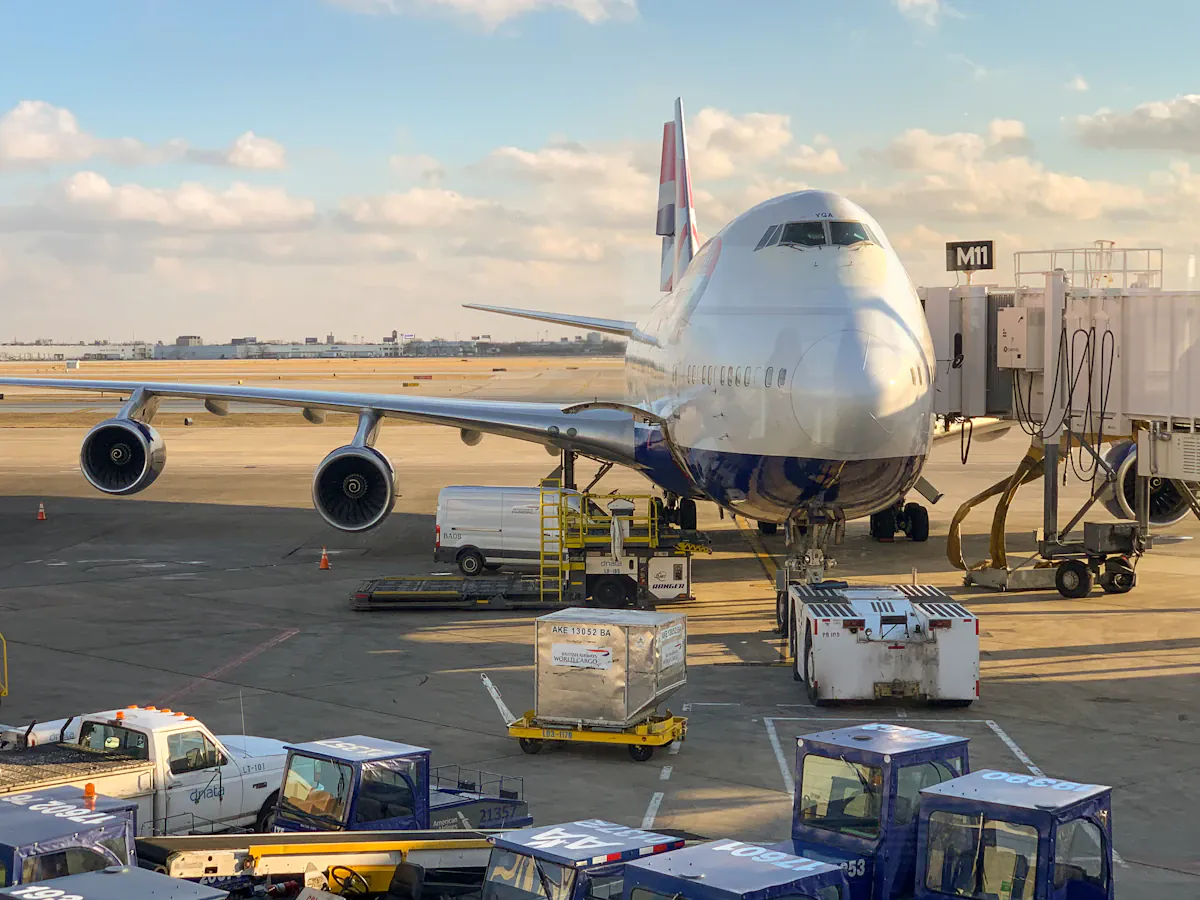
Air freight
Import, export and urgent shipments from Roissy-CDG: booking, cargo security, air waybill, customs and delivery, all coordinated.
Learn moreParcel held by customs
Postal parcel, express or air freight: who to contact in your case, what you will pay and when OTEX can handle the formalities.
Learn more
A file to clear through customs at Roissy-CDG?
Describe your file, then send us the invoice, the air waybill or the arrival notice by e-mail or WhatsApp: we tell you what is missing, estimate the duties and taxes and send you a quote within 24 working hours for any complete request.